
"We Told You So"
It's annoying.

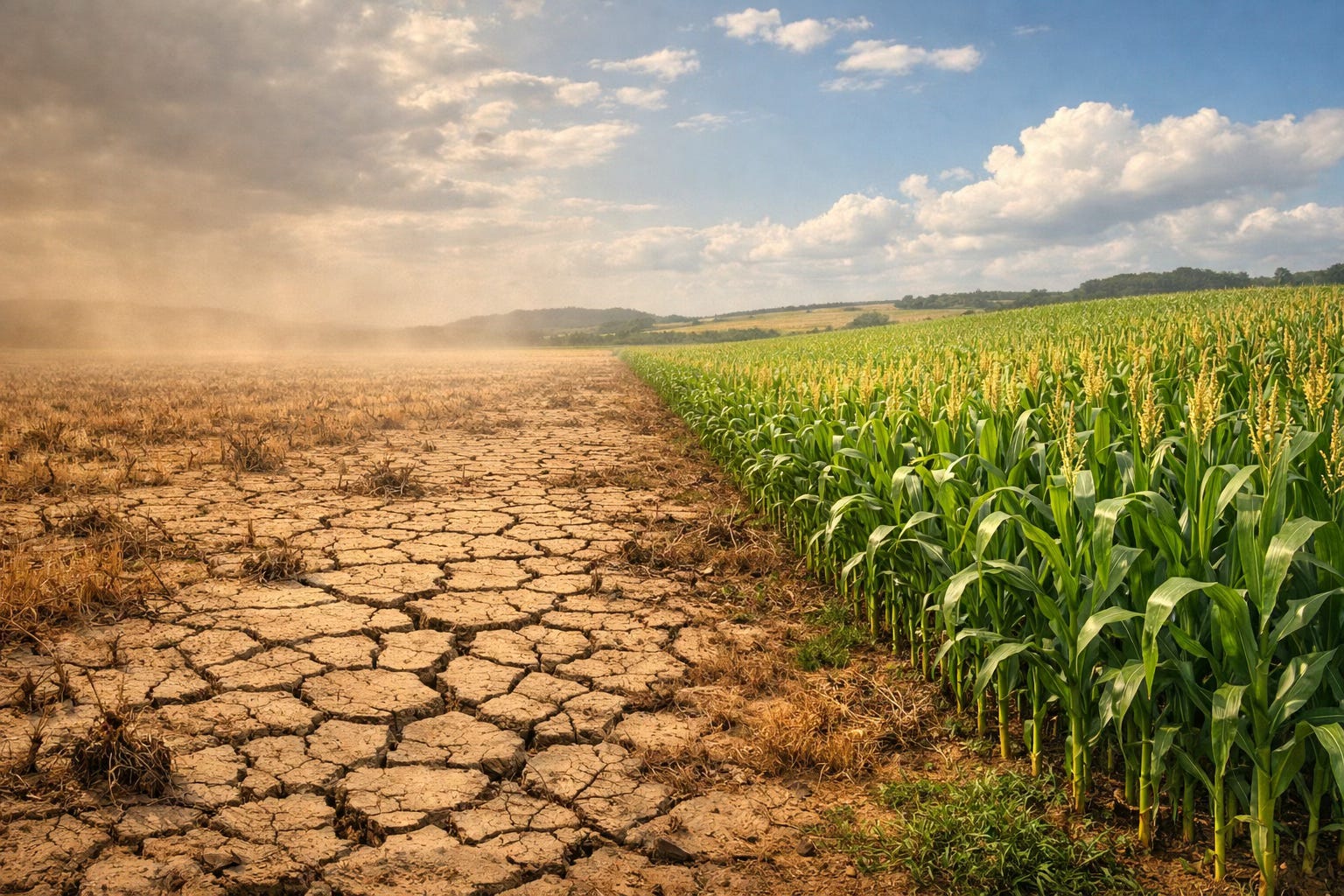
During the Dust Bowl, many farmers hated
the gummint experts, the egghead agronomists
telling them how to plow their fields, like they
knew better—city boys with fancy learning—
about what they and their ancestors had been doing
for generations, going back to the founding.

They had to see their neighbors—the ones who were willing
to listen through their prideful irritation—
plant their crops in newfangled contours and terraces.
Then they had to see, side by side,
their own dead fields up against bright green
and willowy crops thriving in the sun.

Those who waited too long to see the truth
or never would admit that they were wrong
lost their farms—and some lost more than that.

Intransigence feels righteous to wounded pride,
but ignorance will eat up everyone in the end.
Democratic peoples sometimes base their judgments on resentment. A voter feels looked down on by experts, professionals, and educated people. From that painful feeling he draws a mistaken conclusion: the experts must be wrong. But feeling insulted is not an argument and wounded pride is a poor guide to action. You may not like the competent doctor who tells you to stop drinking, or the master engineer who says the bridge is unsafe. But if those people know what they are talking about, what to do is clear: you listen, you learn, and you accept the truth, even when it stings.
That is why it’s better to have experts in government than fools. It’s not because they are saints. Not because they are always right. Not because a diploma confers wisdom. They are better for the same reason a trained pilot is better than an untrained passenger at flying the plane. Politics is not magic. It is a skill. It deals with law, money, war, public health, and hundreds of other hard problems that do not get solved by gut feeling alone. Citizens have every right to judge their leaders. But they have no right to pretend that ignorance is as good as knowledge, or that anger is as good as skill. Socrates and Aristotle made this point again and again: we trust doctors and sailors because their jobs demand real knowledge. Politics runs everything else. It cannot be the one field where not knowing something counts as a virtue.
The American people tested that idea in 2024 for the second time in a decade. Donald Trump won the presidency. His flaws were well known and were on open display. People knew who he was. They saw how he had governed before and how he treats law, decency, and truth with contempt. They voted for him knowing that his anger and grudges would not be restrained. They would become policy and the policy would produce chaos. The warnings were not guesswork or high analysis, but were based on recent memory. The people chose to bring him back anyway—by a slim margin, but a disastrous one.
And so someone has to say the words that always cause offense: “We told you so.” There is no nice way to say them. They sound smug—especially when they are true. But truth does not stop being true just because it is unwelcome. Decent America told you so. It told you that the damage would not stay limited to the people you dislike, that it would reach to your savings, your job, your town, your neighborhood. The early trade shocks under Trump’s return did exactly what critics predicted: they shook the markets, raised fears of a trade war, and set off recession alarms at home and abroad.
The problem is not simply that the wrong man won. Democracies can survive bad leaders. The problem is: Why did so many people want this foolish man? For many voters it boiled down to emotional payback. They wanted to strike out at people they felt had mocked or corrected them. Sticking it to liberals mattered more than protecting their own money, their own rights under the law, or their own children’s future. They picked revenge over self-interest. That is the truly damnable thing. Bad government is bad enough. Bad government chosen on purpose, for the emotional charge of lashing out, is worse.
The Dust Bowl offers an older American example of the same mistake. Plains farmers did not wreck the land because they were bad people. They wrecked it because they took old habits to be hard-won wisdom. What they called traditional farming was over-plowing thin, fragile grassland because they believed the wrong things about soil, climate, and yield. New Deal officials had to walk those farmers out to their own fields and show them, plot by plot, that contour plowing and terracing were not just government meddling. They were the simple conditions of survival. Argument alone was not enough. People had to see with their own eyes that what felt normal to them was killing the land and their livlihoods.
That story offends a comfortable democratic belief. We like to say ordinary people know best. Sometimes they do. Local knowledge is real. Experts can be arrogant and wrong. But none of that changes the basic fact: there are many times when ordinary people are simply wrong, and badly wrong, about things too complicated for instinct alone to settle. At those moments a free people has two choices. It can accept correction from people who know more, or it can treat correction as an insult and wreck itself through wounded pride.
A healthy democracy needs humility as much as it needs equality. It needs citizens who can say: this person knows more about trade than I do; this one knows more about disease; this one knows more about war, money, or farming. I am still a citizen. I still have the right to judge. But I will not make a creed out of what I do not know.
That is what went wrong in 2024. Too many Americans chose the warm thrill of resentment over the hard work of thinking. They heard expertise as put-downs. They heard warnings as lectures. They heard this will end badly and answered: maybe—but at least it will offend the people I hate. That is not the wisdom of the people; it is the politics of a child. And once you see it clearly, the words we told you so stop sounding like a taunt. They sound like an epitaph—what a serious country says when it realizes that the wisdom of the people has died from indulging in folly and spite.
The problem with your analogy is that in this case, the analog of the New Deal officials would be the Democratic Party, who far from showing voters point by point how their agenda was a simple condition of survival, dedicated nearly all of their energy to trying to convince us that Joe Biden was young and healthy. Then, when that lie became impossible to sustain, they avoided having Kamala Harris describe her agenda at all. You can't belittle people for not having faith in an alternative when they were never actually given an alternative to have faith in.